
Whole jobs, not features.
Some people spend their whole week on one of these. Each page walks the job as it runs today, then as it runs when your AI prepares the work through Zeno, pulls what it needs from the files, calendar and mail it already reaches, and leaves the decisions with you.
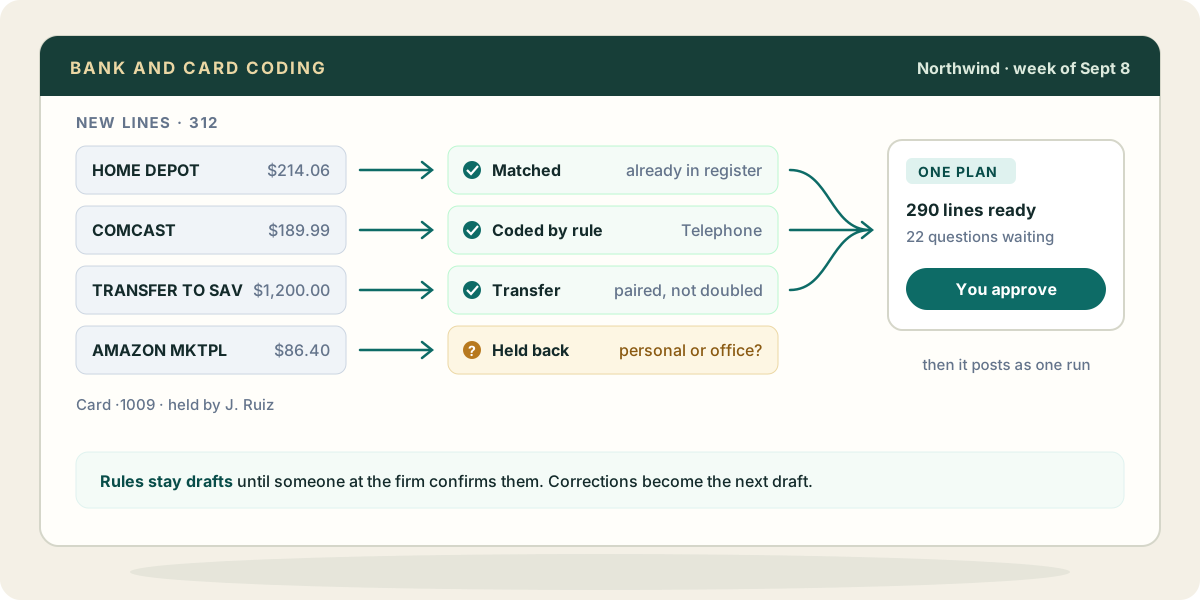
Familiar vendors coded by confirmed rules, existing entries matched, transfers paired, and the unclear lines held back with a question.
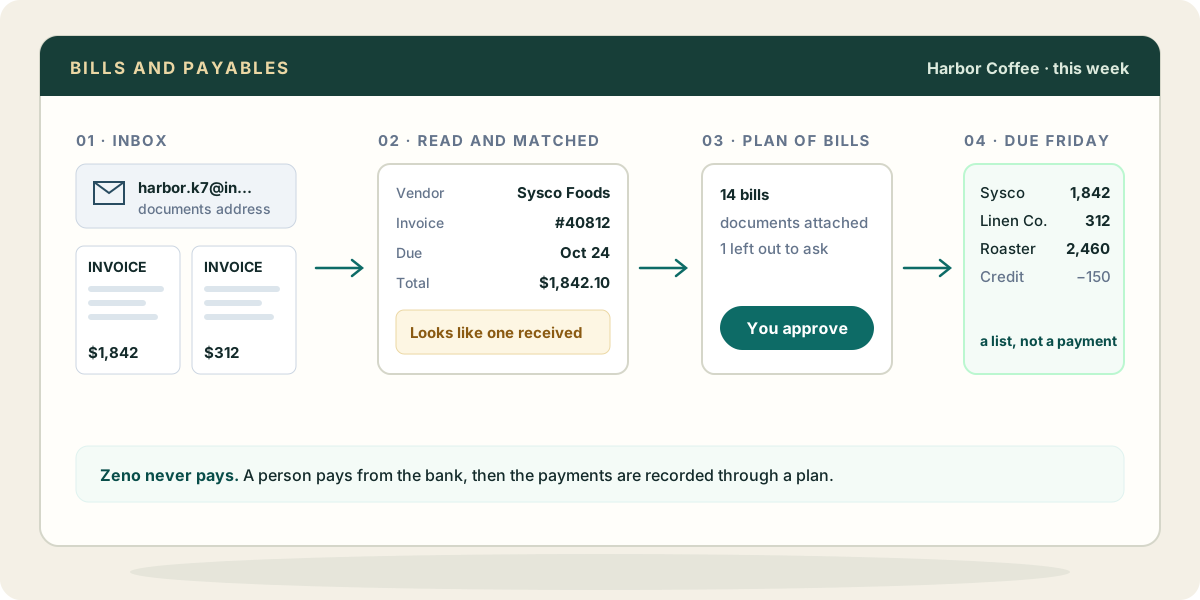
Bills read from the inbox, vendors matched, duplicates flagged, statements checked against open bills, and a list of what is due, ready to pay.
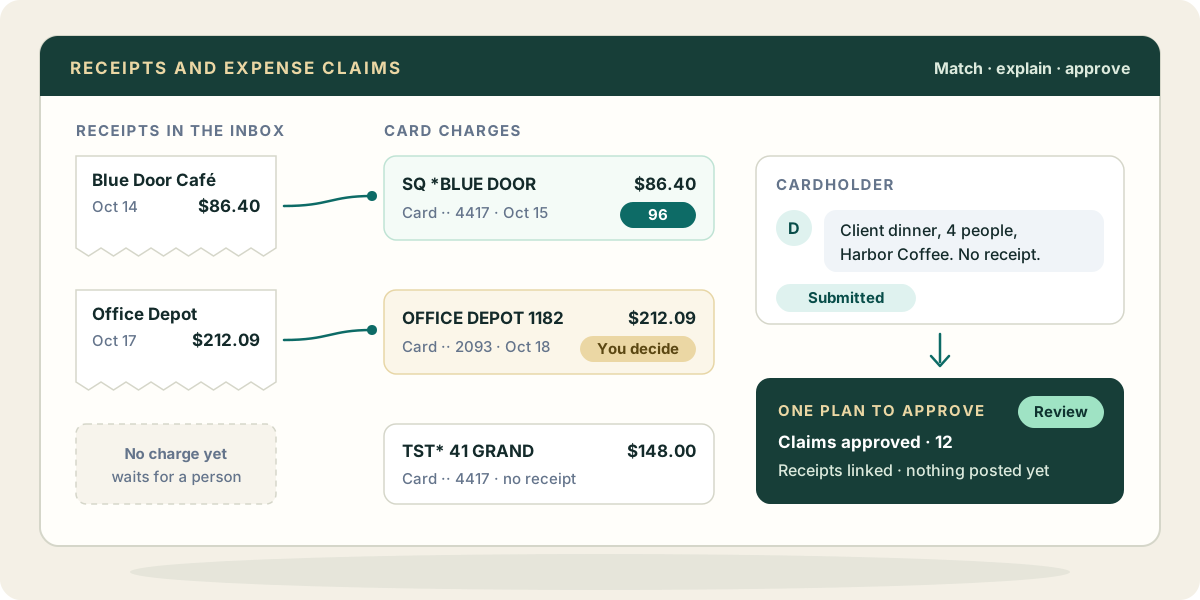
Match receipts to card charges, let cardholders explain their own spending, and approve claims and postings in batches.
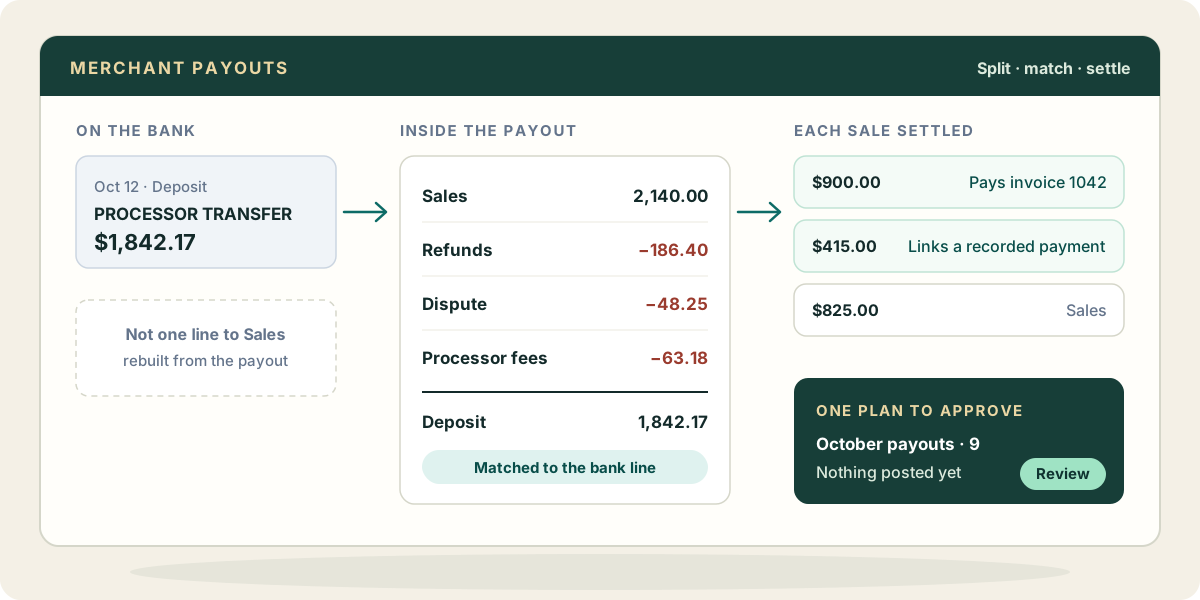
Split each Stripe, Square or Helcim deposit into sales, refunds and fees, matched to the bank line and to open invoices.
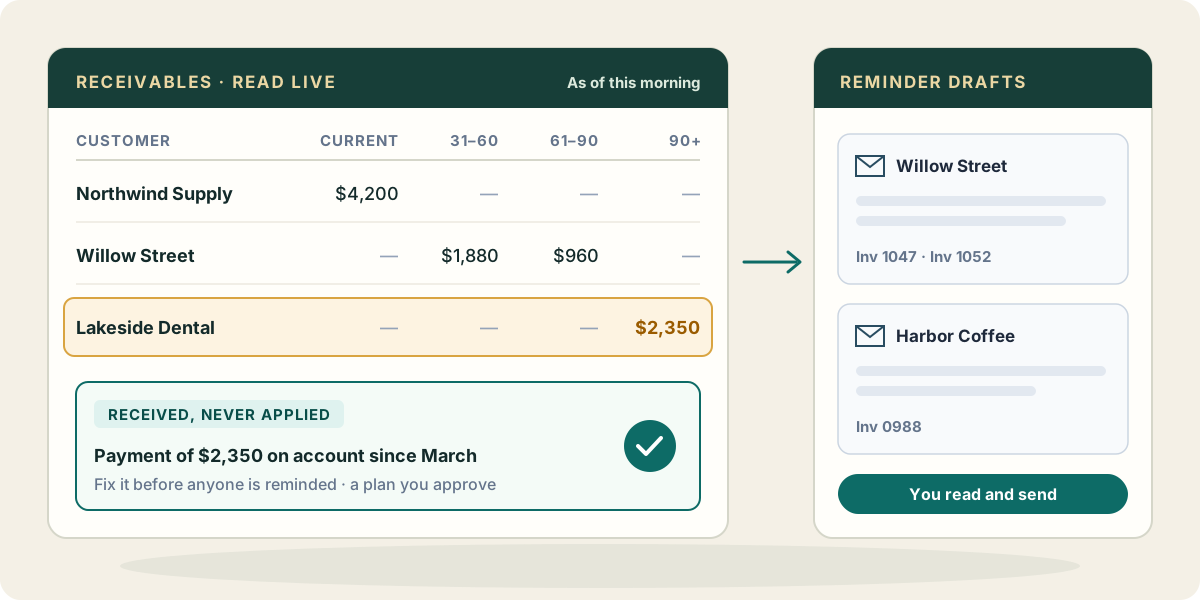
A live aging, the payments that never got applied, and reminder drafts in your own voice, before anyone gets chased for money they already paid.
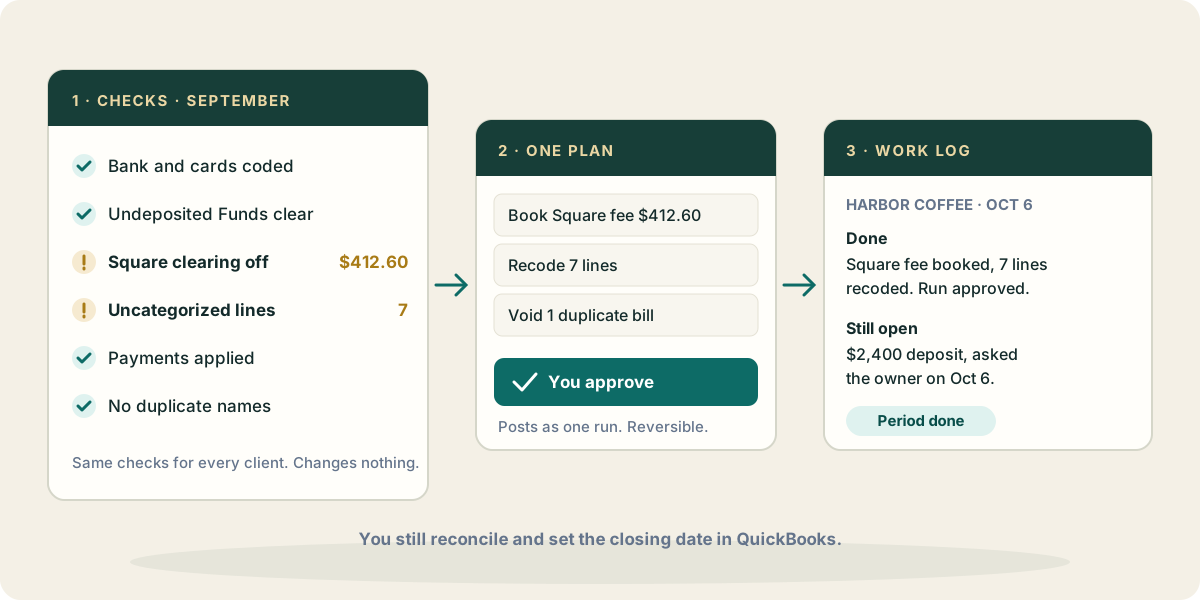
The same checks and written steps for every client, fixes as plans you approve, and a log of what is still open.
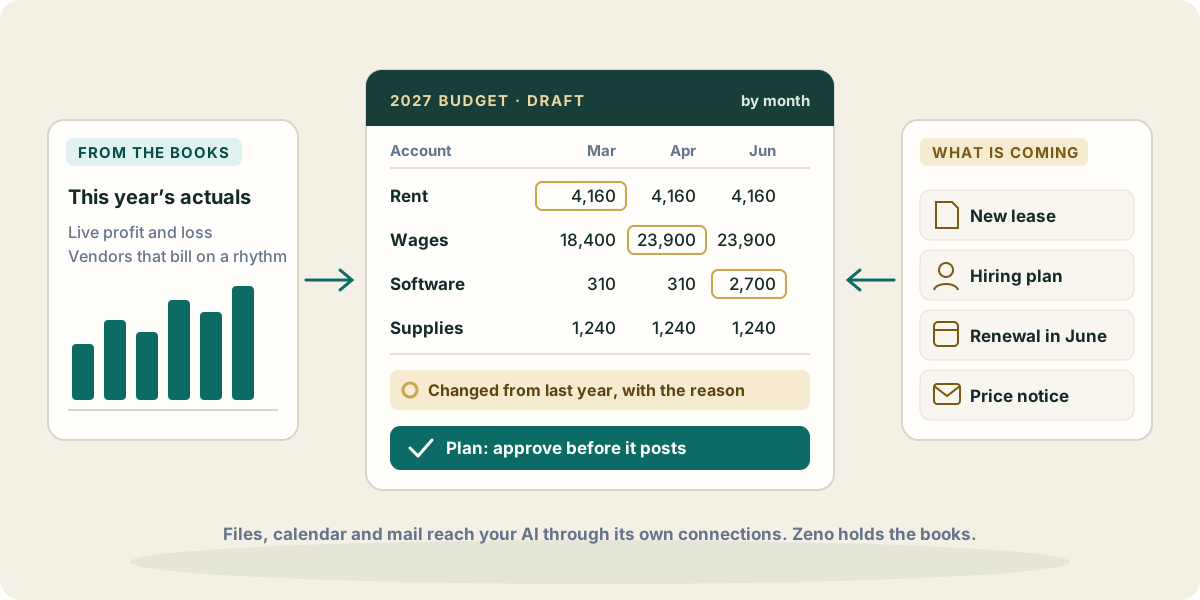
Draft the budget from live actuals plus the hires, leases and price changes already in the client’s files, then track the year against it.
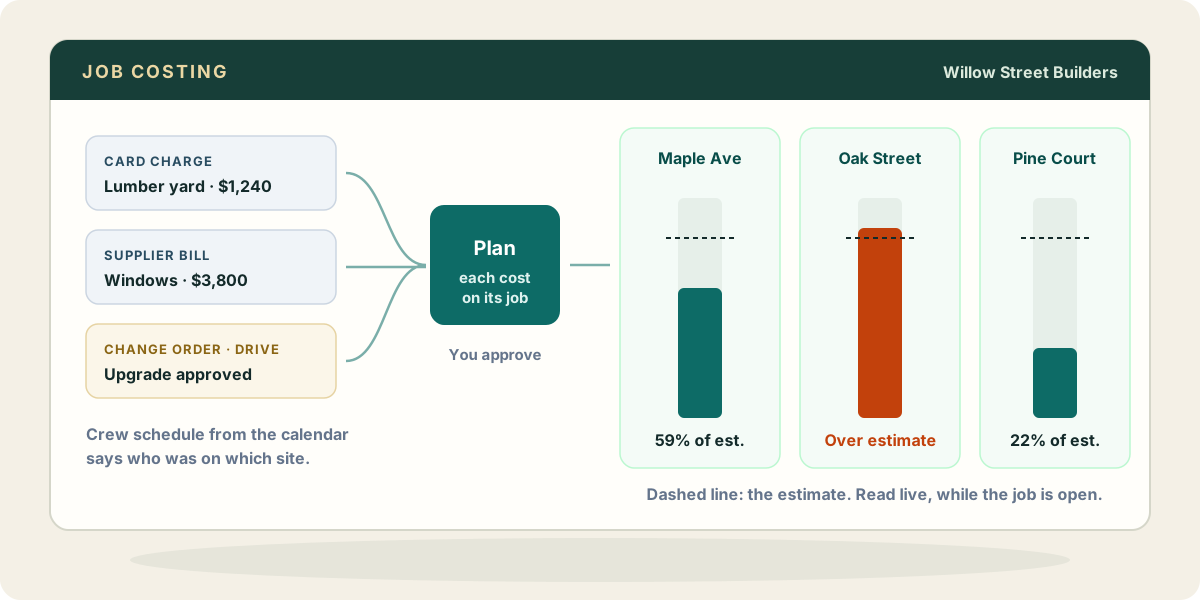
Costs tagged to the right project and class as they are coded, so a job's numbers are right while there is still time to act on them.
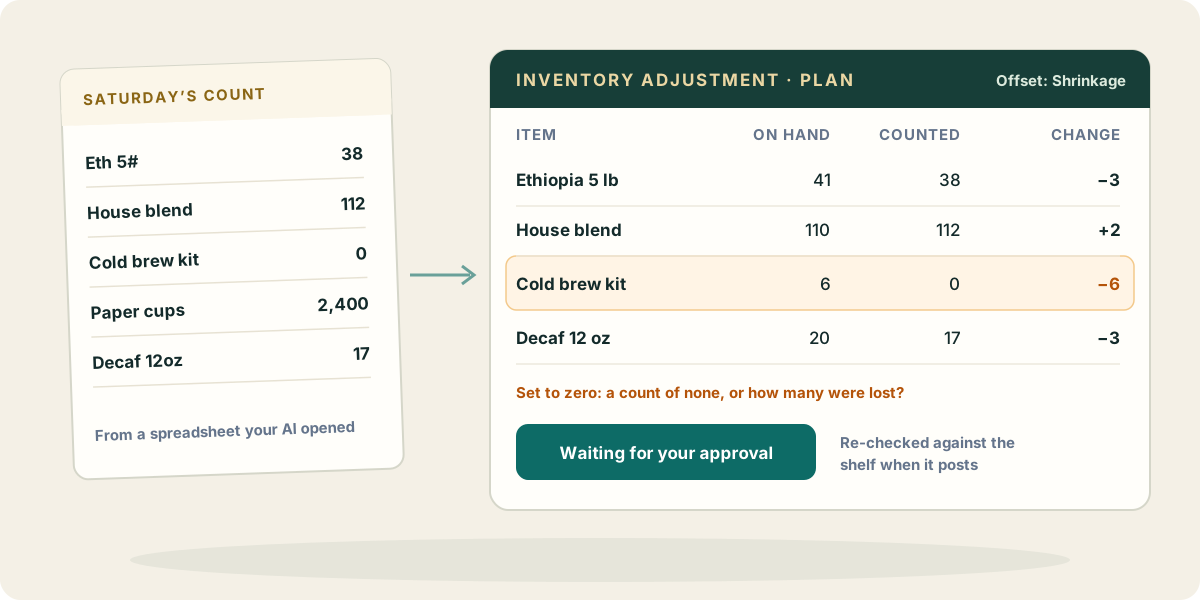
The count sheet becomes one reviewed inventory adjustment, with every difference worked out and every odd line flagged before it posts.
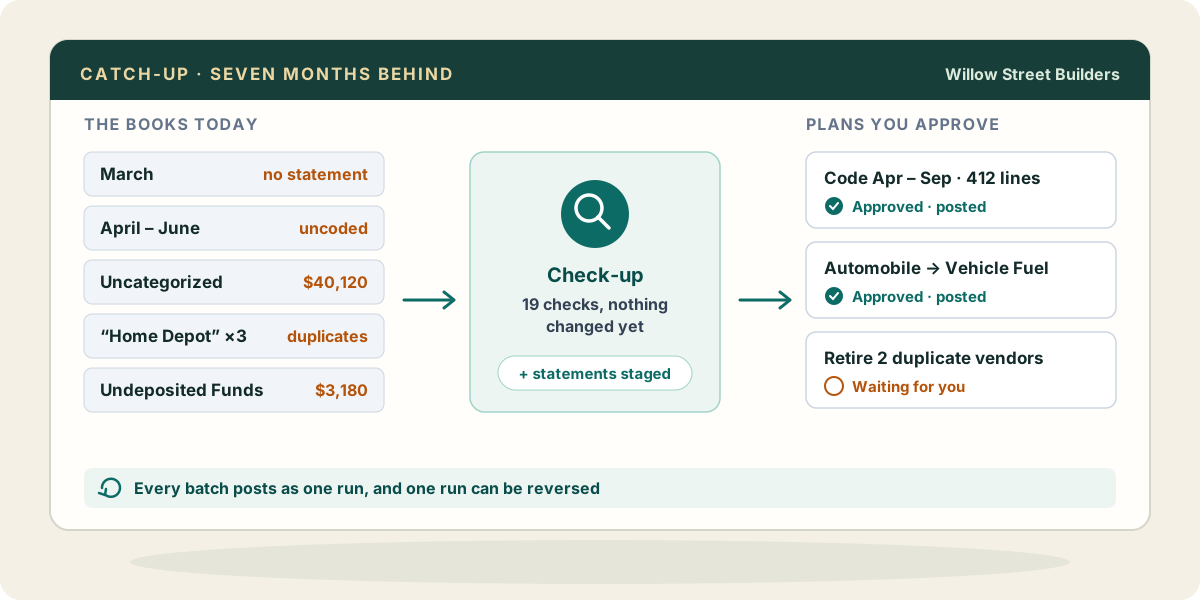
Behind or badly kept books brought current: a check-up first, missing months from statements, corrections in reversible batches.
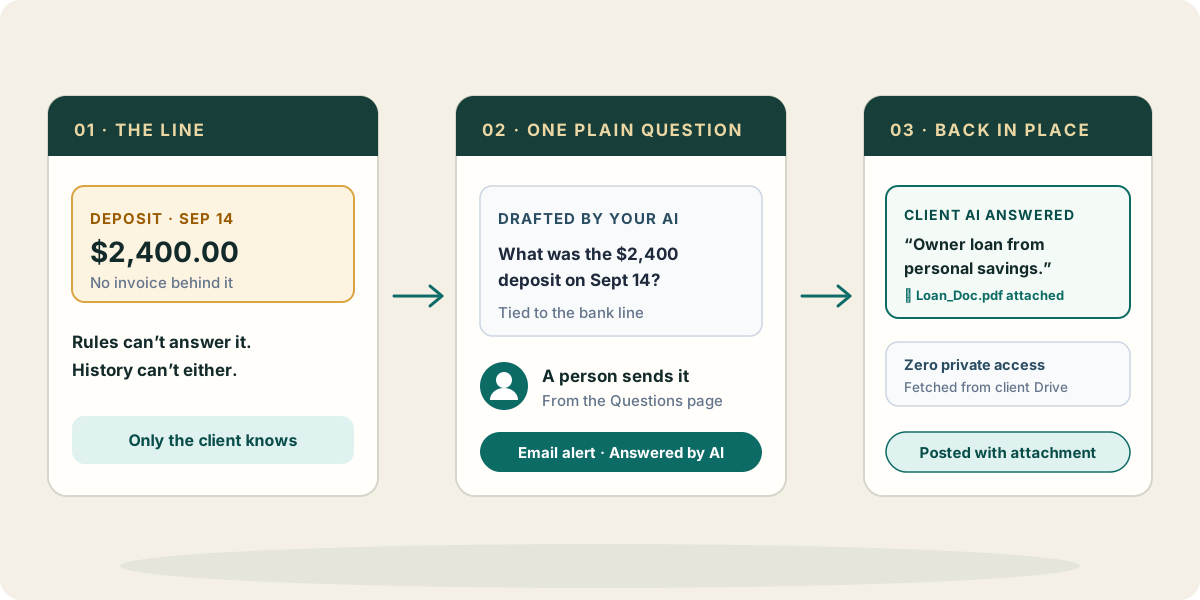
Questions drafted from the books, sent by a person, answered by link or email reply, and filed beside the line they were about.
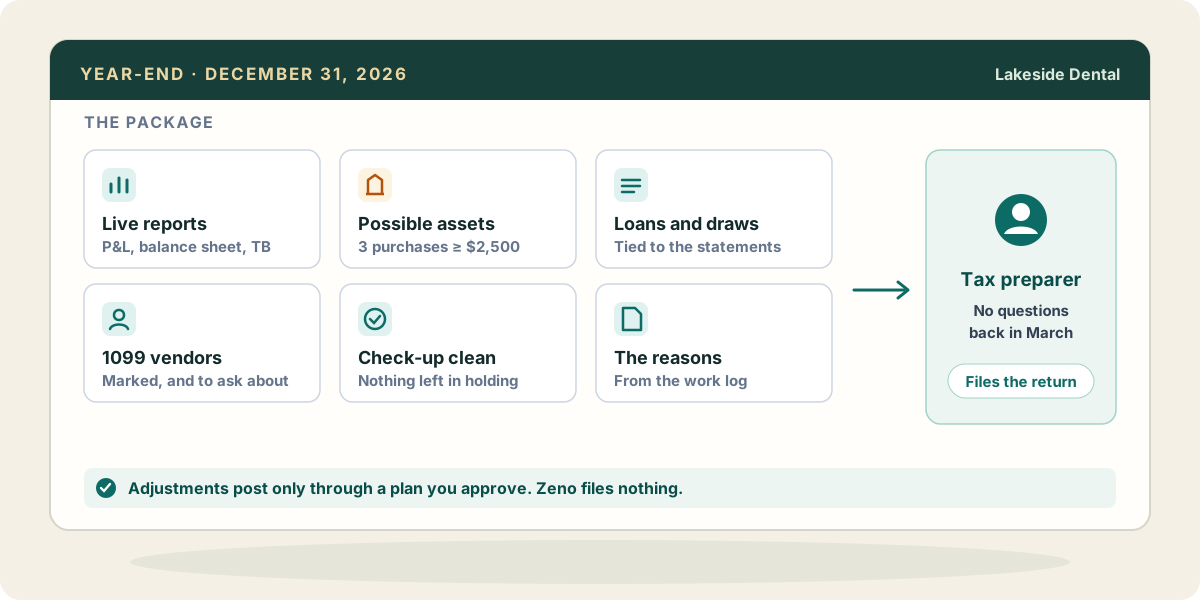
The package the tax preparer asks for, from live reports, with assets, loans, draws and 1099 vendors checked before it goes.